
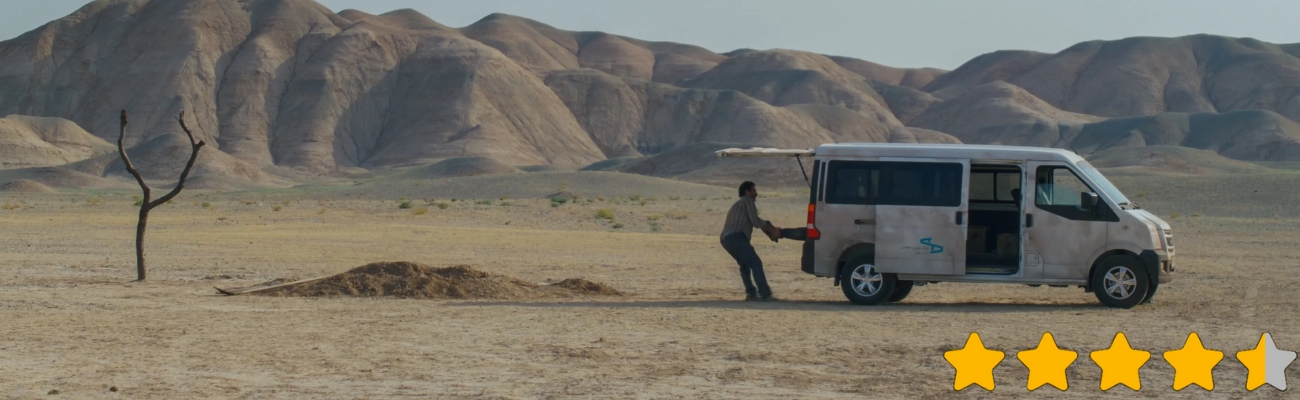
It Was Just an Accident (dir. Jafar Panahi)

Certificate: 12A
Running Time: 105 mins
UK Distributor: MUBI
UK Release Date: 5 December 2025
WHO’S IN IT WAS JUST AN ACCIDENT?
Vahid Mobasseri, Mariam Afshari, Ebrahim Azizi, Hadis Pakbaten, Majid Panahi, Mohamad Ali Elyasmehr, Delnaz Najafi, Afssaneh Najmabadi, Georges Hashemzadeh
WHO’S BEHIND THE CAMERA?
Jafar Panahi (director, writer, producer), Philippe Martin (producer), Amin Jafari (cinematographer), Amir Etminan (editor)
WHAT’S IT ABOUT?
In Iran, a chance encounter with his former captor (Azizi) leads a mechanic (Mobasseri) on a moral crusade…
WHAT ARE MY THOUGHTS ON IT WAS JUST AN ACCIDENT?
Few filmmakers can claim to be as brave as Jafar Panahi, for the Iranian filmmaker – a long-time critic of the country’s totalitarian regime – has repeatedly defied arrests, imprisonments, and decades-long bans on filmmaking to keep creating movies that outwardly criticise the inhumanity that his own government inflicts upon its citizens. His latest film, It Was Just an Accident, is by far the most high-profile critique he’s yet made – least of all because it walked away with the Palme D’Or at this year’s Cannes Film Festival – but also potentially the most powerful.
Much more outwardly vocal than Panahi’s previous films about the horrors and traumas that ordinary people have been forced through, and how such things can make monsters out of us all, It Was Just an Accident is, understandably, a profoundly angry and pessimistic film. Nonetheless, you are completely empathetic towards its volatility, because Panahi has crafted an endlessly gripping revenge thriller based around what most persecuted Iranians, including perhaps the filmmaker himself, can only wish to do to their oppressors, enough to where it can leave audiences who are lucky enough not to be living under such conditions to feel pretty pissed off as well.
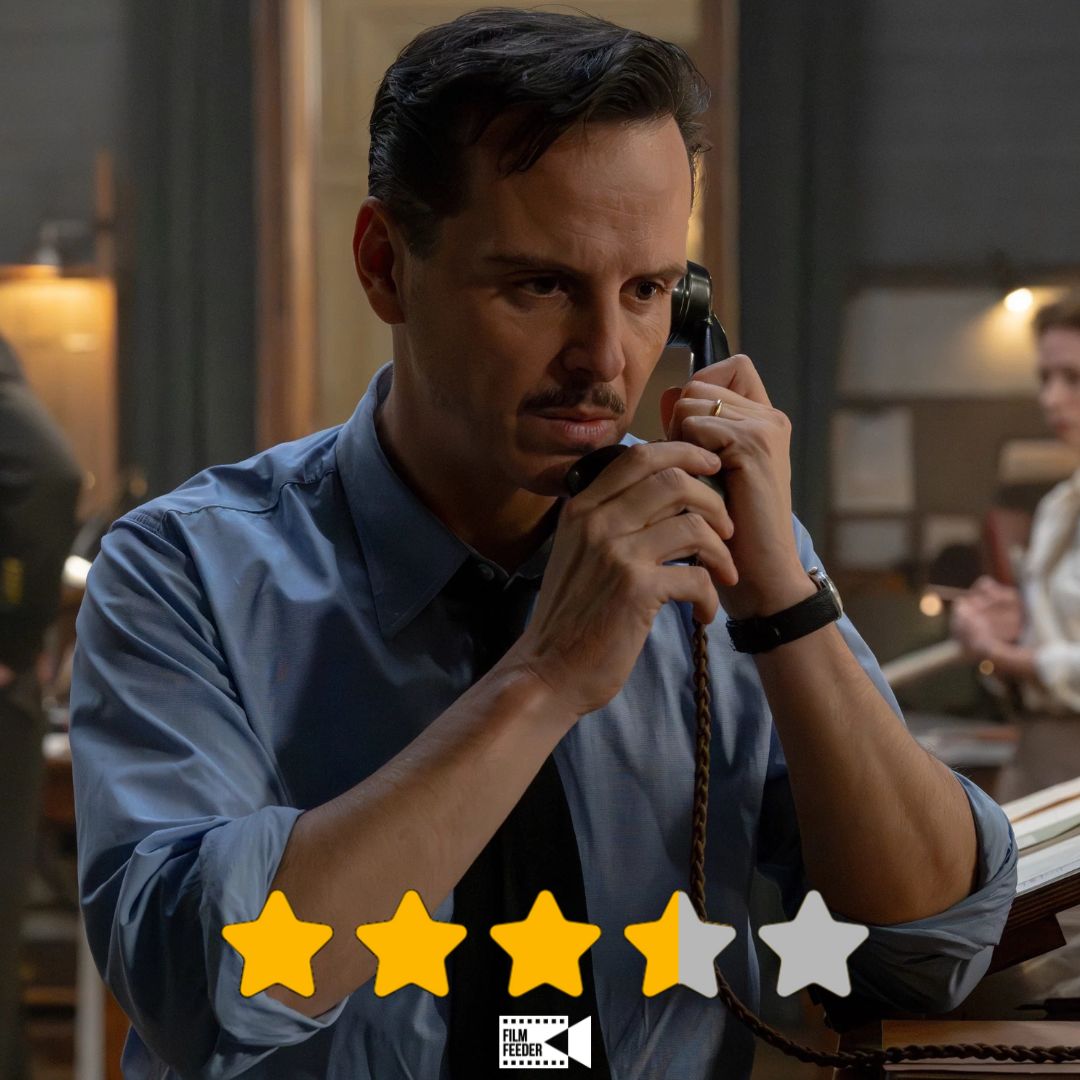
The film begins with a man known as Eghbal (Ebrahim Azizi) who, whilst driving at night with his family, unintentionally runs over and kills a dog. “It was just an accident,” the wife tells their upset young daughter, and so is the fact that, after the car malfunctions shortly after, they end up outside of a garage hoping for help to restart the vehicle, which is also where Vahid (Vahid Mobasseri), a mechanic suffering from problems with his back and kidney, witnesses Eghbal wandering the garage, his prosthetic leg squeaking an all too familiar sound to Vahid’s ears.
As it turns out, Vahid is a former political prisoner who was tortured and left with permanent bodily damage by an intelligence officer with a very similar lack of leg, and is immediately convinced that the very same man has now wandered into his vicinity. So begins a personal quest for Vahid as he stalks and then abducts Eghbal, intending to take his sweet revenge on the man who ruined his life. But not before consulting a few of the man’s other potential victims, including photographer Shiva (Mariam Afshari), bride-to-be Goli (Hadis Pakbaten) – whose groom Ali (Majid Panahi) dutifully tags along – and volatile worker Hamid (Mohamad Ali Elyasmehr) to make sure that he indeed has the right man.
There isn’t an ounce of flab on Panahi’s narrative, with every moment right down to the least consequential ones feeling utterly necessary for the unnerved tone throughout, and only adding to the immense pressure you’re feeling with each step that these characters take toward a troubling resolution. The director knows just what he wants to say and how he wants to say it, whether it’s via a series of heated arguments these people have among each other about the ethics and even the philosophy behind inflicting similar violence onto someone who dished it out to them, or in a few long-takes where the camera stays firmly on its subject as they wander aimlessly through specific scenarios. Panahi’s direction is sharp in its damning portrait of a country so consumed by suppressed emotion that the sheer prospect of vengeance plays out as an almost cathartic exercise for those who may be too scared to act, having been beaten and psychologically, possibly even sexually, abused into submission by who they think is lying unconscious in Vahid’s van.
Even if one were to take away the fierce political commentary (though to do so would be to rob the film of its ultimate reason for being), It Was Just an Accident still works as an engrossing thriller where you’re never quite sure how it’s going to play out. There’s no musical score throughout the entire film, save for a few diegetic blasts of music on the radio, with Panahi relying entirely on mood and the performances of his cast to boil the rising tension until it’s on the verge of flooding the entire cooking surface. It often leaves you gasping at some of the unexpected developments along the way, including one that involves the abducted man’s pregnant wife, and another that consists of an unnerved run-in with a pair of crooked security guards, because Panahi paces his film so well and presents characters in such a way where you completely understand their viewpoint, as extreme as some of them may be. The film can even be darkly funny at a few points, with improvised ways of covering up their intentions to others resulting in a few uneasy laughs, albeit to a point where it doesn’t quite fit alongside the rest of the movie.
But the core theme at the film’s heart is anything but funny. Through mere dialogue alone, Panahi conveys the horrifying brutality that citizens have to endure under such an oppressive system, and how there is very little hope of humanity winning out in the end, no matter how far some go to try and do the right thing in the wrong environment. This is especially apparent in a closing piece of imagery, complete with chilling sound design, that is exceptionally chilling, yet also open to interpretation – though most if not all possible explanations do not amount to anything positive for those involved. It’s a final shot that strongly conveys how, regardless of whether or not we do the right thing, there is no escaping a system that has been intricately designed to favour the powerful and not the powerless.
It’s far from an accident as to how this scored the highest prize at Cannes, nor is it surprising that it’s one of the year’s most intense movies, from one of the braver filmmakers working today.
SO, TO SUM UP…
It Was Just an Accident is an exceptionally tense revenge thriller that sees filmmaker Jafar Panahi at his most critical of the oppressive Iranian regime, all through a compelling and well-structured narrative filled with unexpected turns and haunting imagery.



Other recent reviews:






0 Comments