
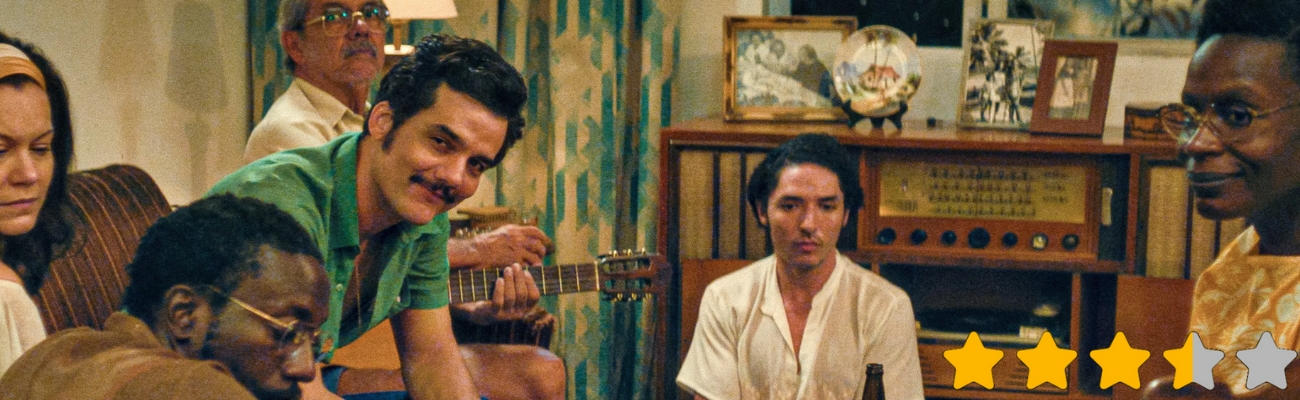
The Secret Agent (dir. Kleber Mendonça Filho)

Certificate: 15
Running Time: 161 mins
UK Distributor: Mubi
UK Release Date: 20 February 2026
WHO’S IN THE SECRET AGENT?
Wagner Moura, Alice Carvalho, Gabriel Leone, Maria Fernanda Cândido, Isabél Zuaa, Udo Kier, Carlos Francisco, Tânia Maria, Robério Diógenes, Roney Villela, Hermila Guedes, Laura Lufési, Thomás Aquino, Italo Martins, Igor de Araújo, Kaiony Venâncio, João Vitor Silva, Enzo Nunes
WHO’S BEHIND THE CAMERA?
Kleber Mendonça Filho (director, writer, producer), Emilie Lesclaux and Wagner Moura (producers), Mateus Alves and Tomaz Alves Souza (composers), Evgenia Alexandrova (cinematographer), Matheus Farias and Eduardo Serrano (editors)
WHAT’S IT ABOUT?
In 1977 Brazil, a widower (Moura) is targeted by the country’s dictatorship…
WHAT ARE MY THOUGHTS ON THE SECRET AGENT?
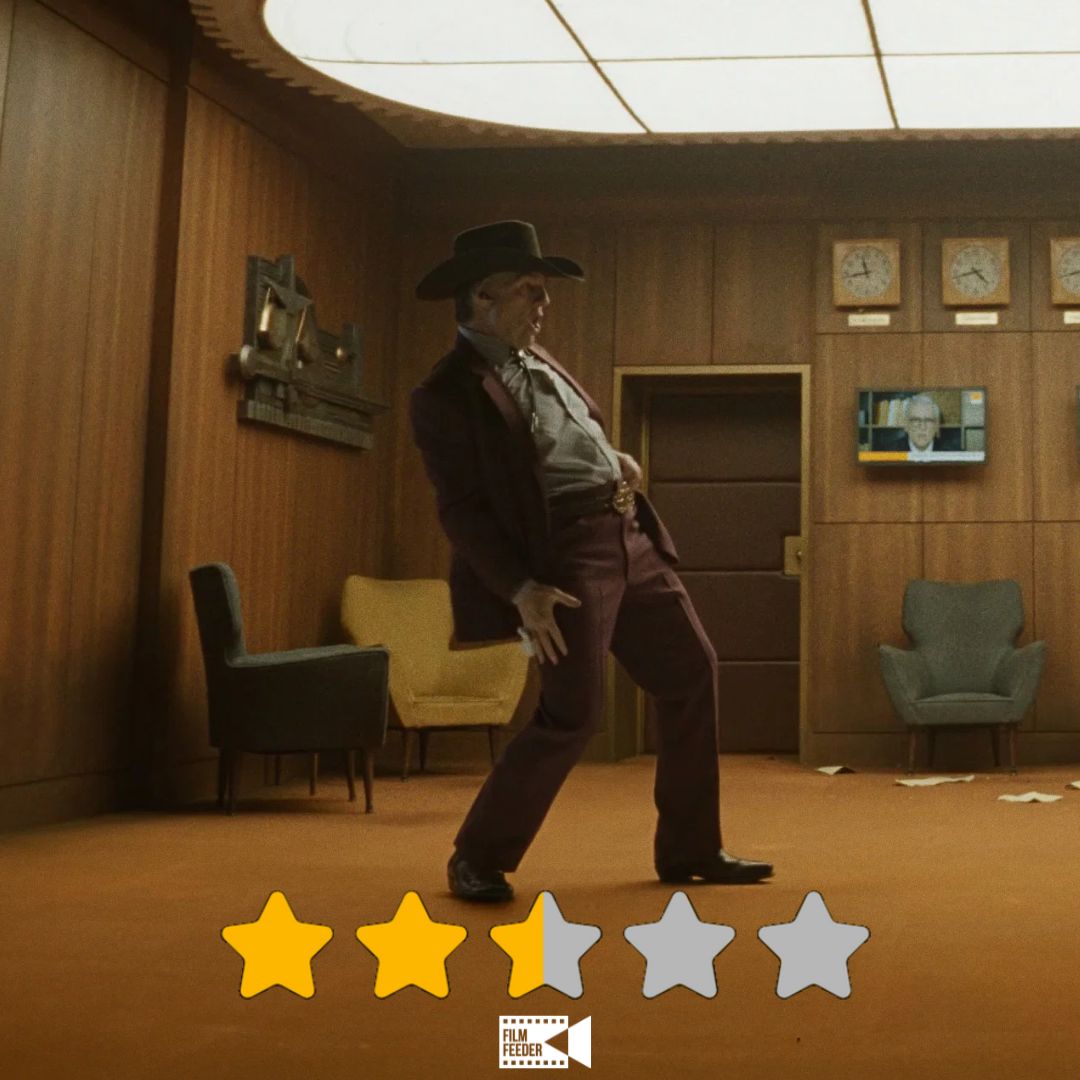
Quite deep into Kleber Mendonça Filho’s The Secret Agent, things suddenly take a turn for the absurd. You’ll know which moment I am referring to as soon as you see it for yourself, but without revealing specifics, the film – up to that point a slow-burn political thriller not unlike The Lives of Others or Tinker Tailor Soldier Spy – briefly adopts the aesthetic of a grindhouse horror movie, complete with cheesy stop-motion effects as a surprising menace begins stalking and preying upon people just minding their own business in a seedy part of town. Then, just as soon as it’s introduced, the moment goes away, almost never to be brought up again.
At first, it seems like such a bizarre aside for what is otherwise a very maturely handled film, one that Filho treats with dignity and intrigue for the remaining 95% of it. But underneath, it emblemises a strangely distorted account of events in 20th century Brazil where, unlike the recent and more straightforward (and honestly preferred) drama I’m Still Here, the country’s authoritarianism was so laughably desperate to scaremonger that it would come up with the most out-there explanations of certain things to cover up their own crimes against humanity, even if they sound as though they were thought up in the loony bin.
To watch such insanity unfold is one thing, but to live through it is another, and Filho’s film does well to capture a complex point in Brazilian history where people could be persecuted or hunted down for the pettiest of reasons, all while maintaining a grounded (for the most part) approach that keeps it fairly engaging to watch, despite a rather dense approach.
Set primarily in 1970s Brazil, the film opens with Armando (Wagner Moura), a former teacher on the run after running afoul of the wrong person, travelling to a safe haven for political refugees in the city of Recife, briefly stopping at a petrol station where a dead body is casually lying out in the open, which not even the crooked cops who then show up to strongarm a bribe out of the fugitive traveller seem to care about. Upon arrival after that fairly tense yet cooly calculated moment, Armando – known to fellow fugitives and their landlady Dona Sebastiana (Tânia Maria) as “Marcelo” – lays low with a job at an identification centre, where he forms an uneasy alliance with corrupt police chief Euclides (Robério Diógenes), while ensuring his young son Fernando (Enzo Nunes), whose biggest concern amidst all the stuff going on with his father is not getting to see Jaws at the cinema where his grandfather Sr. Alexandre (Carlos Francisco) works as a projectionist, remains safe. However, he also has to deal with the imminent arrival of hitmen sent by his vengeful enemy, while attempting to convey his story and those of countless other persecuted individuals to the wider world.
Though ultimately insignificant to the central plot, the aforementioned corpse at the petrol station and the startling indifference that most show towards it sets the tone for Filho’s idiosyncratic but somehow still straightlaced retelling of Brazil’s ruthless dictatorship. The filmmaker reimagines the atmosphere as one where obnoxious greed is rewarded and social defiance is met with swift retribution, whether it’s merciless bullying at the expense of a Jewish Holocaust survivor mistaken for a former Nazi (played by a cameoing Udo Kier) or heavy newspaper propaganda that constantly pushes targeted hit pieces and cover stories for blatant militarist abuses of power. It’s far from idyllic, and at times exceptionally gritty, but offers a playful tone that aligns itself with classic espionage capers of the era and even plays around with time settings, frequently cutting back and forth to present-day wraparound segments that, while initially jarring, serve a heartfelt purpose by the end.
However, it’s one of those films where the narrative is so rich with detail yet also quite dense in how it delivers it, that it can feel overwhelming to experience. Adopting a slow-burn pace, The Secret Agent unfolds more lethargically than might be expected, causing some plot strands to meander as it keeps certain cards a bit too close to the chest until the right time, by which point you may be a little confused as to who, where, what or even when we’re supposed to be focusing on in this story. While entertaining enough, and kept compelling in large part thanks to Wagner Moura’s charismatically understated lead turn, the film tends to drift in and out of what it’s trying to convey, which can make some of the more outlandish moments, least of all that brief turn into weird exploitation cinema, seem all the more baffling at first.
In terms of recent Brazilian cinema, particularly those that address some of the many harrowing aspects of the country’s past totalitarian regime, I would personally not place The Secret Agent above or even just below I’m Still Here. That film, for me anyway, really went deep into exploring the utter turmoil that tore families and friends apart to where I still think back fondly on its emotional power, whereas Filho’s film is a bit more scattershot in its approach and can be less emotionally available as a result. It’s still a good movie, one that has a strong enough entertainment factor, but not one that you’ll fall as much in love with.
SO, TO SUM UP…
The Secret Agent is a well-made and often highly entertaining look at political persecution in 70s Brazil that’s carried by a charismatic lead turn by Wagner Moura and an amusingly idiosyncratic style by filmmaker Kleber Mendonça Filho, but its meandering nature and lethargic pace both bring it down a few pegs.



Other recent reviews:






0 Comments