
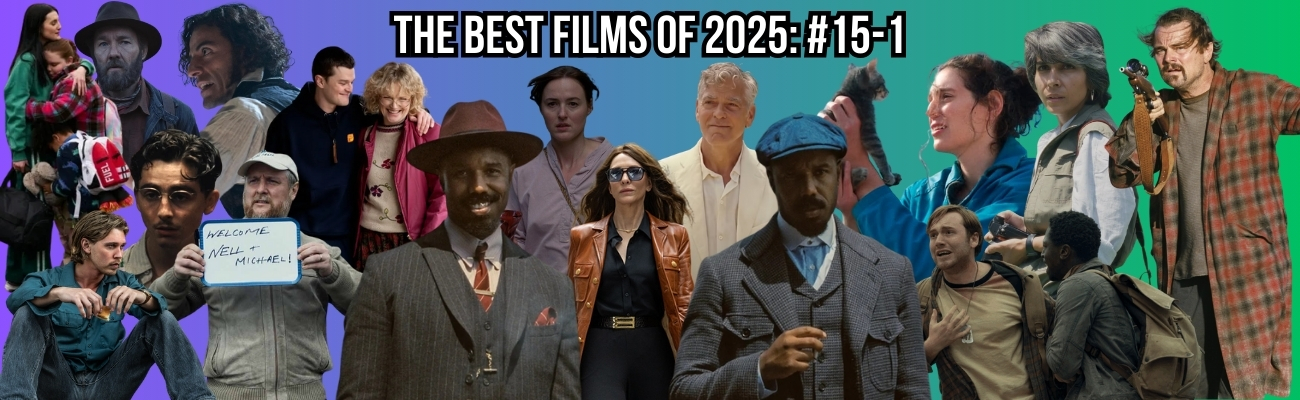
The Best Films of 2025: #15-1
15 | 14 | 13 | 12 | 11 | 10 | 9 | 8 | 7 | 6 | 5 | 4 | 3 | 2 | 1 | Send-Off
Welcome back to the second part of our big countdown to the film’s best movies, where the films that have delighted us the most and given us endless enjoyment are finally revealed!
Or, if you want to skip to any particular number, click the hyperlinks above!
Enough chit-chat, let’s get right down to business…
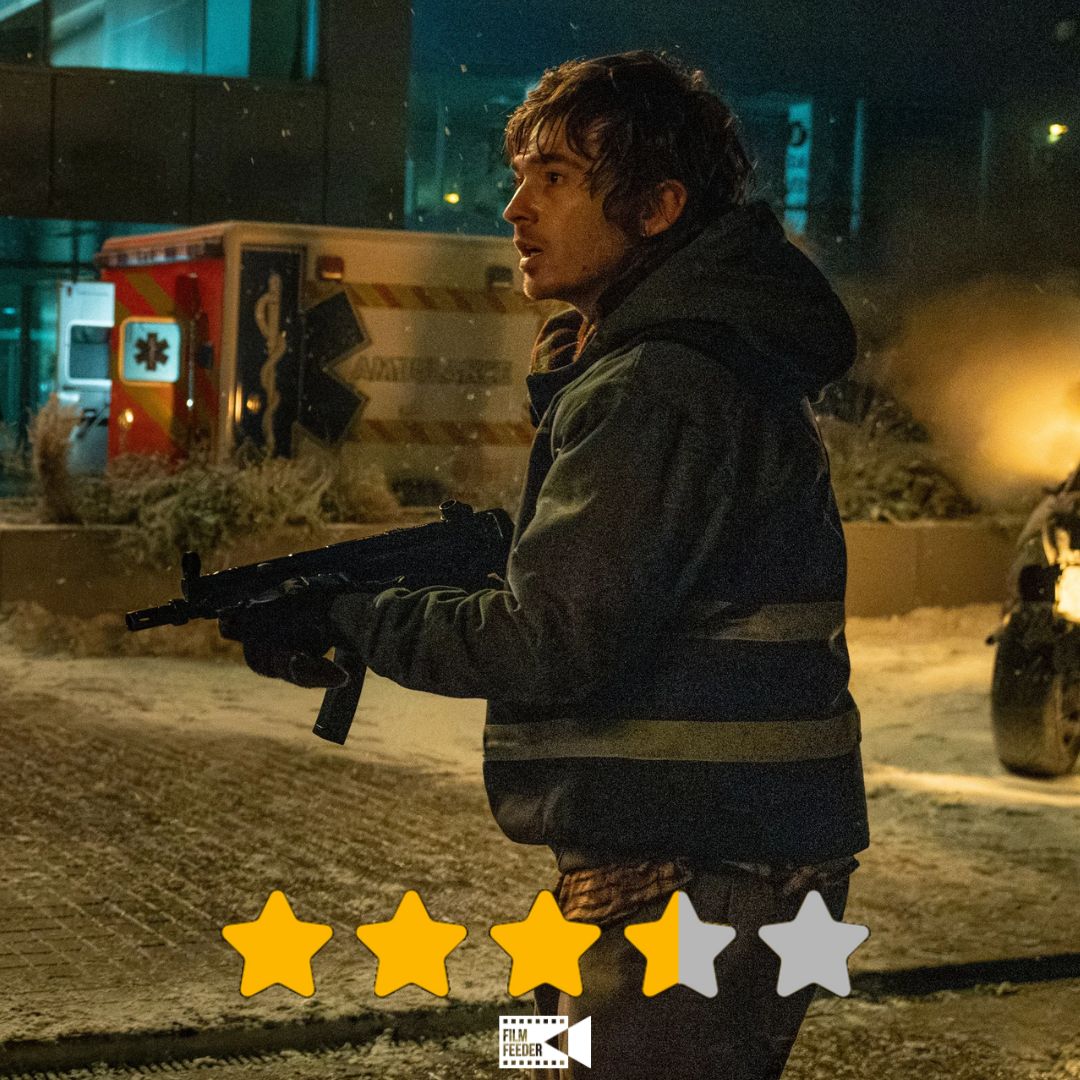
15 – Caught Stealing (dir. Darren Aronofsky)
This hugely entertaining 90s-set comedic thriller seemed an unlikely outing for director Darren Aronofsky, especially coming after The Whale which might as well have handed out knives to the audience to slit their wrists after sitting through its misery, but it turned out to be the most fun he’s ever had behind the camera, which became apparent from the first frame onward.
Aronofsky’s adaptation of Charlie Huston’s novel (the writer also provided the screenplay) offered car chases, nightclub shootouts, a pair of deadly Hasidic mobsters, Regina Hall as a crooked cop, and an adorable cat owned by a punk-rock Matt Smith, all set to an increasingly bizarre set of events that almost made it feel like this decade’s After Hours – which it might as well be, seeing how Griffin Dunne was also in this movie – but with much more brutality and shocking violence. Carrying it all was Austin Butler, whose movie star charisma was solidified in the lead role of a deeply flawed sap trapped in the middle of events beyond his own control, making him a protagonist you could easily root for while also, at times, being frustrated by his very human mistakes and lapses in judgement.
It was a wild ride that finally saw Aronofsky have some fun in the director’s chair, and it made for one of the year’s most entertaining thrillers…

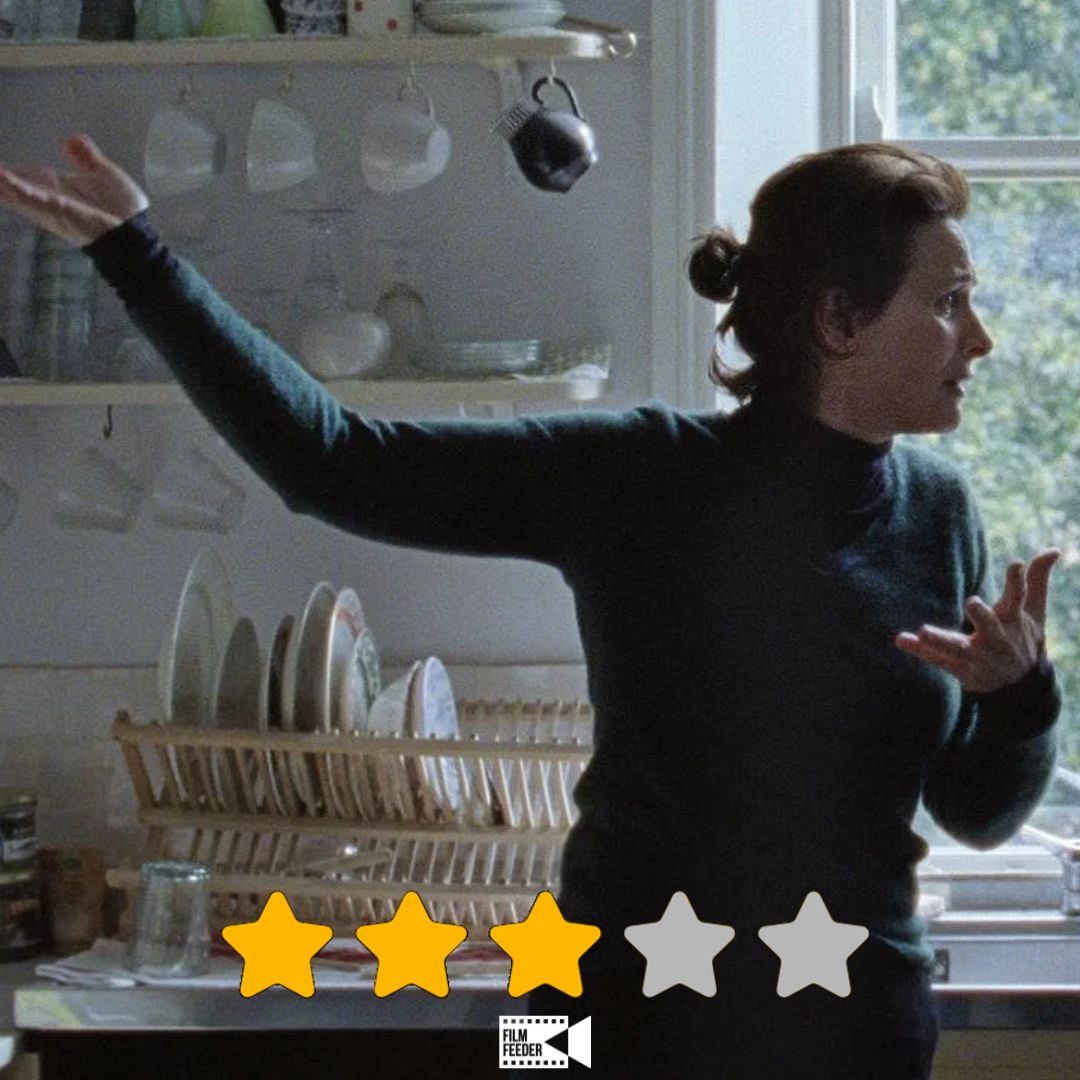
14 – Sentimental Value (dir. Joachim Trier)
Joachim Trier’s much-anticipated follow-up to The Worst Person in the World took a far different, much more poignant direction that gained instant acclaim upon its Cannes debut (where it won the Grand Prix, the festival’s second-biggest award after the Palme D’Or), but its emotional power was strong enough to land on its own two feet.
Trier clearly took heavy inspiration from the filmography of Ingmar Bergman for his tale of Stellan Skarsgård’s filmmaker and his rocky relationship with adult daughters Renate Reinsve and Inga Ibsdotter Lilleaas that was made further complicated by the unlikely presence of Elle Fanning’s Hollywood starlet, but the Norwegian filmmaker made the dramatic rhythms his own, exploring generational trauma as well as painfully human feelings of regret and anxiety which transcended language. His and Eskel Vogt’s excellently layered script, along with fantastic performances across the entire ensemble, presented an identifiable scenario that everyone could relate to, and carefully strutted out its sombre developments without nosediving into full-on melodrama thanks to restraint from every one of its storytellers.
Plus, it also did the impossible and made both Irreversible and The Piano Teacher – two very famously unfunny movies – the centre of an extremely funny gag. That alone should get it up for every award possible…
13 – It Was Just an Accident (dir. Jafar Panahi)
All too fittingly, the second-place Grand Prix winner of this year’s Cannes Film Festival directly leads into the actual Palme D’Or winner on this list, but even when one takes that distinction away from the conversation, Iranian filmmaker Jafar Panahi’s gripping thriller is a winner in every other regard.
Much has been made about how Panahi, who had been effectively banned from filmmaking in his home country after previous criticism of its Islamic Republic, shot the film in secret without so much as a filming permit, but his story of an ill-fated attempt at retribution was similarly phenomenal in its ability to keep the audience engaged throughout while making it completely uncertain where things would eventually go. You feel the anger in just about every one of these deeply wronged characters, enough to completely understand why they’re taking such risks in order to get their revenge, but at the same time you’re also watching a tragedy unfold as the very thought of vengeance turns them into the very monsters that they are seeking out, proving how violence – no matter how justified – solves little and helps even less.
It’s also got one of the year’s most chilling final shots, which (without spoilers) will cause you to never hear a mechanical squeak the same way again…
12 – Lollipop (dir. Daisy-May Hudson)
A real British gem that shouldn’t be overlooked among the much buzzier titles this year, writer-director Daisy-May Hudson’s wondrous domestic drama tackled some heavy issues with a refreshing optimism that made certain well-worn tropes feel brand-new once more.
The story of a mother fighting the system to reclaim custody of her children after being released from prison may sound like something out of a Ken Loach downer, but Hudson’s observational and naturalistic approach ensured that we saw all the joy in the situation as much as we did the bleak reality of it all, allowing it to avoid the vast majority of conventions that come included with this kind of film and stand out as its own tale of self-discovery in a world where second chances are rare. The performances by a cast of largely unknown actors helped sell the charm, especially lead Posy Sterling whose composure in some of the film’s most emotional scenes broke our hearts and then super-glued them back together, which under Hudson’s grounded filmmaking made it a real mini-triumph in independent British filmmaking.
Like an actual lollipop, this is a film that’s sweet, well-formed, and will leave you craving a whole lot more from its makers…
11 – Black Bag (dir. Steven Soderbergh)
With the James Bond franchise currently in yet another redevelopment phase, director Steven Soderbergh used that time to unleash a spy caper of his own that came with the suave, calculated smoothness of your classic 007 outing, but with the filmmaker’s own distinct and down-to-earth style that made regular old spies cool again.
Soderbergh and screenwriter David Koepp delivered some of their strongest work in years with the original tale of a group of spies, among them Michael Fassbender and Cate Blanchett as a married couple working together in the field, trying to suss out which of them could be a traitor in ways that made The Traitors look like mere child’s play. But while it’s a plot that’s certainly familiar within the realm of espionage fiction, particularly the works of John le Carré which Koepp clearly took after quite a bit, Soderbergh emphasised the unique dynamics among his ensemble that kept the audience and even certain characters guessing the whole way through, especially during an extended dinner party sequence early on that was a masterclass of both writing and editing, which made it unique as well as genuinely compelling as you see how it all plays out in the end.
If Denis Villeneuve decides to drop out of directing the next Bond – and given that Amazon now has full creative control over the franchise, there’s a genuine chance that the auteur could indeed clash with the studio – Soderbergh is right there as a more than solid replacement…
10 – The Long Walk (dir. Francis Lawrence)
Stephen King adaptations didn’t get much better this year than with director Francis Lawrence’s gruelling, brutal and often bleak-as-holy-hell take on a very early King story – so early, in fact, that it was originally published when the author was still using his “Richard Bachman” pseudonym – that put audiences all over the world off of taking up hiking as a hobby.
It made almost too much sense that regular Hunger Games filmmaker Lawrence would bring to life a story that effectively did the whole “let’s place young kids in a deadly competition in a dystopian future” thing long before Suzanne Collins ever entered the picture, but right away the film pulled you in to the beating heart of the story, as emphasised by leads Cooper Hoffman and David Jonsson whose electrifying chemistry and screen presence, along with the rest of their fellow endurance challengers, made you not just care but genuinely feel sad when their sorry little feet could walk no further. The script by JT Mollner, previously of Strange Darling, provided the vast young ensemble with incredible dialogue that brought out further dimensions to their characters, and while there are some very minor changes to the book that may have slightly irritated King purists, the alterations made the ultimate message as well as the arcs of certain figures resonate so much more, to where it easily could be seen as not just one of the best King adaptations in recent years, but perhaps of all time.
It made you feel as though you had been walking hundreds of miles just from sitting and watching it, which really is a testament to the passion and the talents of all involved…
9 – Frankenstein (dir. Guillermo del Toro)
In many ways, it’s surprising that there already wasn’t a Frankenstein adaptation by a filmmaker whose entire MO revolves around emphasising with classic movie monsters, but now that it’s finally here, Guillermo del Toro’s take on Mary Shelley’s genre-defining text was more than worth the wait.
Needless to say with a filmmaker like del Toro, it was a visually stunning epic, with plenty of elegantly designed sets and costumes all captured within Dan Laustsen’s shining cinematography, but more than most straightforward adaptations it truly took the time to explore the dark and dangerous qualities in both Oscar Isaac’s arrogant scientist and Jacob Elordi as his science-defying creation, to where both complimented each other as much as they were radically different. As we saw how their early experiences with abuse and neglect ultimately shaped them into various types of monsters, a truly tragic portrait formed of how humanity’s cruelness is an endless cycle, and as with the vast majority of del Toro’s movies it shows that it can be broken by love and compassion for those who may at first seem different from how we are.
Such musings really do make this one of the most heartfelt takes on Frankenstein, as well as one of the most uniquely epic…
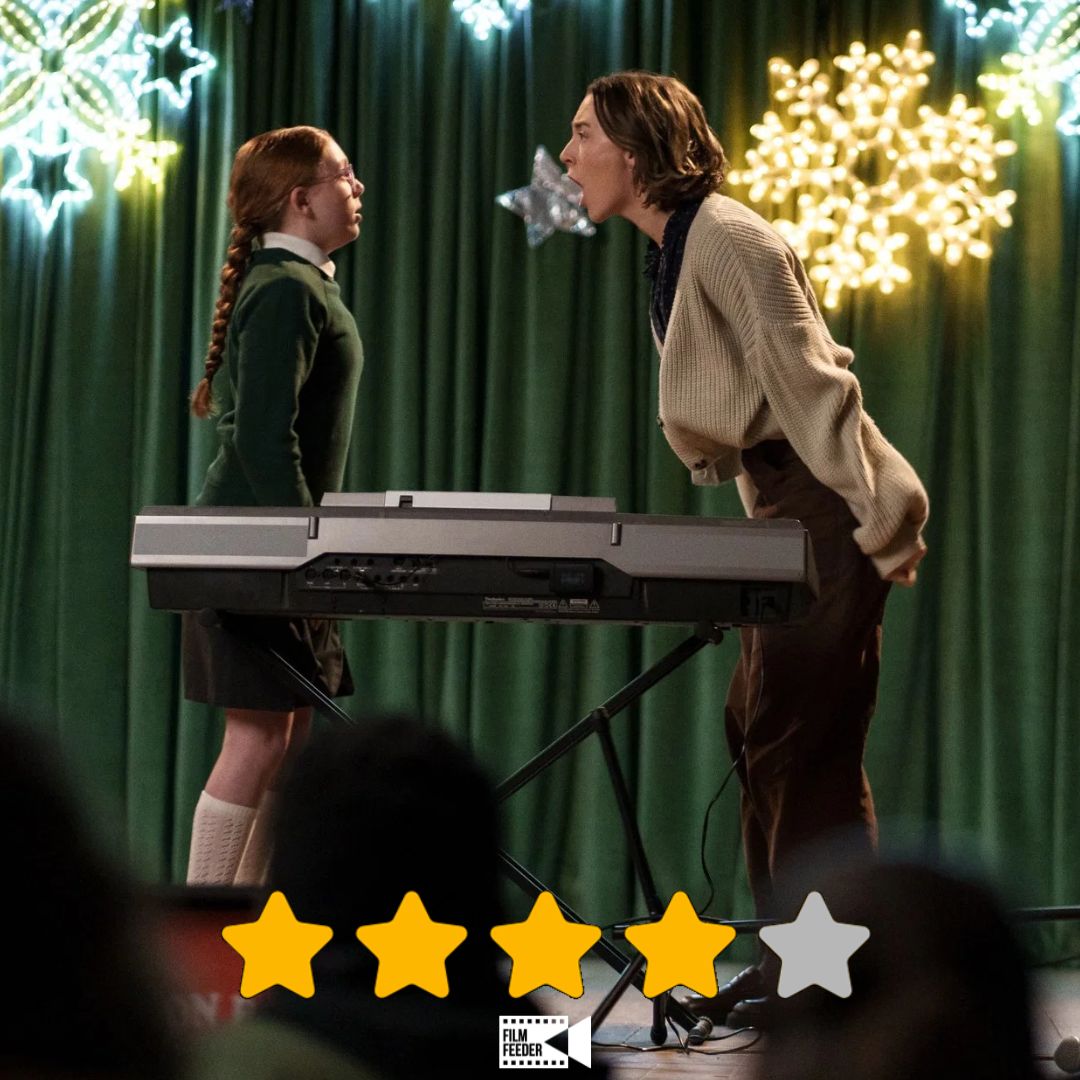
8 – The Ballad of Wallis Island (dir. James Griffiths)
Here’s a film that is just wonderful from start to finish, the only downside being that it ends all too soon, and that we could have spent so much more time in such a charming and joyous world with equally endearing characters.
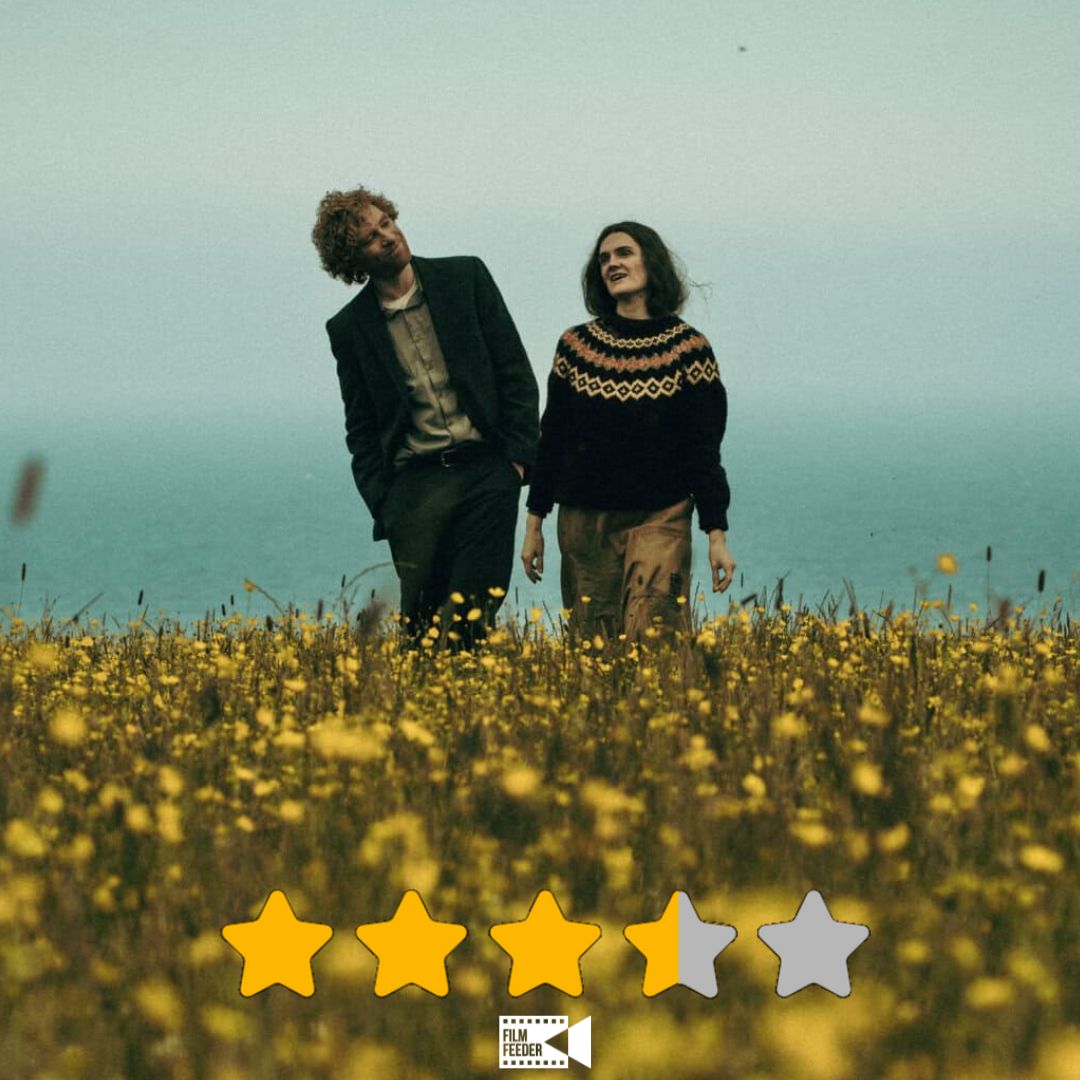
Writers and co-stars Tim Key and Tom Basden transformed their BAFTA-nominated short The One and Only Herb McGwyer Plays Wallis Island into a feature that, under the direction of James Griffiths, presented a truly sweet-natured and wholly engrossing friendship comedy that so happens to involve a washed-up folk musician, his wealthy number-one fan, and his former partner who’s played by Carey Mulligan. It’s impossible to not be won over by the actors’ delightful chemistry, as well as their odd little quirks that make them so much more than a simple comic relief and comic foil duo, while Key and Basden’s funny and tender script tapped into some genuinely heartfelt moments that revealed far more about their own troubled histories than most other comedies of this nature tend to do, leaving you not just laughing but also smiling brightly along with it.
It’s perfect viewing if you just want to escape our dark reality and enter one that’s far friendlier, gentler, and much more optimistic…
7 – Jay Kelly (dir. Noah Baumbach)
Noah Baumbach’s star-studded dissection of what it is to be star may not have made as much of an impact on the awards circuit thus far, but it doesn’t make it any less wondrous as the filmmaker’s greatest strengths were all on display in a pristine adventure that was enjoyable in every possible way.
The personal odyssey of an ego-centric A-lister and his frequently put-upon manager, played respectively by the ever-charming George Clooney and Adam Sandler in one of his very best dramatic performances, was filled with fun little non sequiturs that showcased the hard-working individuals behind some of Hollywood’s most cherished movie stars in ways not truly captured on film before, with Baumbach showing through various slickly-filmed flashback sequences how the titular character’s life and career was built on the borderline unrepentant screwing-over of others, which made it much more of an appropriate modern-day Christmas Carol than the year’s actual such movie Christmas Karma. With various other famous actors like Billy Crudup, Laura Dern and Baumbach’s own partner Greta Gerwig showing up every now and then in brief but important roles, it truly felt like the filmmaker was tapping into his love for movies and their various personalities to make something that has just as much respect for the craft as he does, and it showed in a tightly written, keenly directed, enthusiastically performed, and overall joyous study of always being in the public eye.
It did become an instant favourite Baumbach picture for us, and has made us all the more excited about where he can go from here…
6 – Sorry, Baby (dir. Eva Victor)
This year, we got not one but two buzzy dramas centred around the fallout from a university-set misconduct scandal, and the one that WASN’T directed by Luca Guadagnino and starring the likes of Julia Roberts and Andrew Garfield turned out to be the far superior version, not to mention one of the year’s most impactful films.
Eva Victor introduced themselves as a triple threat by directing, writing and starring in a non-linear story about someone still grappling with the emotional trauma of being taken advantage of under inappropriate circumstances, coming at the difficult subject with a fair balance of dark humour and poignant character-centric drama, while making their deeply troubled character feel like someone who doesn’t just easily function within society despite their clear anxiety issues but also feels as though they should not and cannot be defined by the terrible thing that happened to them. It resulted in a quiet yet loud statement about the very real struggles that those in similar positions have to go through on a regular basis, and how the systems in places to reprehend those responsible are so unhelpful that they effectively leave one with no choice but to suck it up and attempt to move on, which again Victor excelled at with a non-showy directorial style that combined mumblecore drama, particularly in scenes shared opposite Naomi Ackie, with a poignant character study about someone whose trauma cannot be fixed in one simple moment.
It also features an adorable cat which Victor’s character spontaneously adopts, which immediately bumps it up a few positions in our eyes…
5 – Train Dreams (dir. Clint Bentley)
Coming in at exactly the same position as last year’s Sing Sing, which co-writers Greg Kwedar and Clint Bentley also worked on together, is a film directed by the latter that captures the raw beauty of a time and place that has long been lost to idyllic history, and yet feels more alive now than ever before.
Bentley’s adaptation of the similarly titled novella by Denis Johnson also doubled as a pseudo-biopic of its fictional lead character Robert Grainier, a 20th-century logger played by an exceptional Joel Edgerton, and as we saw the most significant events in his life, all revolving around deep love, devastating loss, and fascination but also trepidation for the ever-changing world around him, we caught glimpses of an America that was filled with optimism and prosperity that the divine cinematography by Adolpho Veloso transforms into a historical vision of real beauty and discovery. But director Bentley refused to completely romanticise it, also inserting moments of much darker cruelty where even those closest to us could be removed from the equation at a moment’s notice, while the extremely dehumanising nature of racism and general disregard for elder generations whose hard work paved the way for today’s most glorious achievements was enough to leave you feeling as haunted as Edgerton’s protagonist, making it a very well balanced film that ultimately allowed the viewer to make up their own mind on whether this was indeed a time to remember fondly.
While the America we know today is nowhere near as welcoming or even as optimistic as it once was (or perhaps never even had been), films like Train Dreams serve as solid reminders of the kind of country it could still be, so long as it gets its act together…
4 – I Swear (dir. Kirk Jones)
Of all the films on this list, even the ones I ended up ranking higher, director Kirk Jones’s uplifting biopic of activist and campaigner John Davidson is by far the most personal inclusion, for as someone who also identifies as neurodivergent, I found this movie’s portrayal of Tourette syndrome to be an extremely touching and even necessary bit of representation that I wish existed when I was younger and unable to identify with the traits that ultimately shaped me into who I am today.
Seeing Davidson’s story play out from when he begins developing his various tics at a young age – at a time when Tourette’s was nowhere near as well understood or accepted as it is today – to learning how they can affect him as a young man, played brilliantly by Robert Aramayo, sent viewers (including myself) on a wild emotional rollercoaster, for as it perfectly captured the frustration, self-consciousness and even mentally challenging pitfalls of going about life with such a condition, it spoke to people with similar traits and ways of thinking in ways that few movies, mainstream or otherwise, have genuinely pursued. It’s a film that puts the Tourette’s experience front and centre, rarely ever making such people the butt of jokes but rather humanising them so that we can see things through their involuntarily profane eyes, and whether you also have the condition or any other type of neurodivergence, or might even be plain and boring neurotypical, it’s extremely moving to see how Davidson adapts himself without truly changing how he is, not to mention inspiring to anyone who may want to know more about neurodiversity as a whole.
In fact, the film even inspired me to pursue a Tourette’s diagnosis of my own, for I recognised a large number of traits in the film as my own – just goes to show how important it is that I Swear exists, because it might indeed change a person’s life…
3 – Marty Supreme (dir. Josh Safdie)
The Safdie brothers split up this year and released two high-profile sports dramas through US distributor A24 (both also went through Entertainment Film Distributors in the UK), but while Benny Safdie’s MMA biopic The Smashing Machine was only good for a better-than-usual Dwayne Johnson performance, Josh Safdie’s chaotic epic – very loosely inspired by real-life ping pong champion Marty Reisman – was not only by far the stronger picture, but one of the year’s most enthralling experiences.
Josh’s film truly captured the pressure-cooker spirit of his and Benny’s previous films like Good Time and Uncut Gems, this time in a slightly more traditional 1950s period setting, but even then the filmmaker and fellow screenwriter Ronald Bronstein constantly found ways to make their story of Timothée Chalamet’s cocksure aspiring table tennis professional Marty Mauser transcend that era, from wildly unpredictable set-pieces to a synth-heavy score by Daniel Lopatin (not to mention a few key 80s needle-drops, including one during the most stylised sperm-to-egg sequence since Look Who’s Talking). All the while, Chalamet’s career-best performance truly made us believe in his quest to become the best in the world at what he does, even though he’s constantly screwing over friends, family and lovers in order to achieve his dreams, while the impressively taut pacing kept the chaos contained until just the right moments, when the pressure would cause the entire thing to crack yet still remain thoroughly engaging to watch.
The film’s tagline “Dream Big” certainly applied to this excellent offering from a filmmaker whose chaotic dreams turned out to be as big, and as awesome, as they come…
2 – One Battle After Another (dir. Paul Thomas Anderson)
Paul Thomas Anderson is one of Hollywood’s most beloved auteurs, so it was no surprise that his tenth feature would be among the year’s most anticipated features, but not even the director’s most loyal legion of fans could have predicted that his latest bumbling epic would become one of the year’s – possibly even the decade’s – most defining features.
Working on a far bigger canvas than ever before, PTA’s loose adaptation of Thomas Pynchon’s Vineland charted the irreverent lives of modern revolutionaries fighting back against an increasingly totalitarian authority where fascism and open prejudice were scarily encouraged, not to mention represented by a never-creepier Sean Penn as the year’s best antagonist Col. Steven J. Lockjaw, a bigot whose secret desires also made him exceptionally and hilariously pathetic, especially when using brute force to secure new friends that would comfort his ultimate sense of belonging. On the opposite end, you had Leonardo DiCaprio on top form as a stoned-out-of-his-mind reluctant hero whose devotion and love for daughter Chase Infiniti (one of the year’s biggest breakthroughs) drove his and our burning desire to stop those in power from causing harm and ill-will among others, all as some stellar cinematography, brisk editing, a nerve-wracking musical score by Jonny Greenwood, and of course some perfectly focused direction by PTA himself made it an exhilarating study of modern America that may not be quite as farfetched as it may appear to be on the screen.
With all of that under his belt, PTA more than earned himself a few small beers for delivering a truly unforgettable cinematic adventure – but not even the might of One Battle After Another could completely eclipse the ultimate choice for the #1 spot on this list…
1 – Sinners (dir. Ryan Coogler)
Arguably more than the likes of One Battle After Another, Marty Supreme and Train Dreams combined, Ryan Coogler’s horror-tinged historical masterpiece introduced audiences to a world so fully realised and so lived-in, to a point where every corner of each set practically came with its own backstory, that it never ceased to be truly amazing.
Coogler’s storytelling skills were on full force as he blended weighty commentary on the deep-rooted exploitation of gifted musicians with old-fashioned vampire horror, creating a fully fleshed-out ensemble of characters who all felt painfully real, including and especially in moments of prejudice and genuine heartbreak, amidst a heightened concept that gave us some truly memorable monsters to fear while also understanding where they may be coming from (even if they’re ultimately an evil bunch of bloodsuckers). Every single actor – from Michael B. Jordan whose dual roles brought out some of the actor’s most versatile work to date, to young breakout Miles Caton whose acting talent beautifully matches his soulful singing voice – is perfect, as is Coogler’s writing, direction, and handling of every other aspect like Autumn Durald Arkapaw’s 70mm IMAX cinematography and Ludwig Göransson’s atmospheric soundtrack, all of it coming together in the year’s best scene: a one-shot journey through the past, present and future of music that was truly unlike anything we’d ever seen, enough to put every single person involved in bringing it to life straight into the history books.
Audiences everywhere seemed to agree, for it also became one of the year’s biggest success stories, scoring extraordinarily highly among critics and earning well beyond its $100 million budget, and is currently on par with One Battle After Another for year-end nomination hauls while also being set to do very well among Academy voters, too. The fact that it has become its own cultural revelation doesn’t just stem from what the film is setting out to say about us as a society, nor does it even come from how great the music, performances and filmmaking is, but really it comes from Ryan Coogler having the guts to make something on this scale with studio backing and free rein to do and say whatever he so wanted. In doing so, Coogler has become one of our most fascinating filmmakers, one who isn’t afraid to get deep into some of our most troubling issues within our culture while also making the ride as entertaining as he possibly could, and with Sinners he’s cemented himself as being right up there with Christopher Nolan and Steven Spielberg whose very name is enough to get one excited about whatever they may be working on.
Since both those big names have even bigger movies coming out next year, they’ll have to compete with Coogler’s film, our pick for the very best of 2025, for the crown of studio flick with enough guts and blood to make any vampire salivate…
And with that, our Best Film of 2025 list has been crowned, bringing our year to a triumphant close!
Thank you all for helping to make this another stellar year for Film Feeder, with plenty more awesomeness to come in 2026!
See you in the New Year!
Want to find a specific film?
Search for it in the box below:



0 Comments