
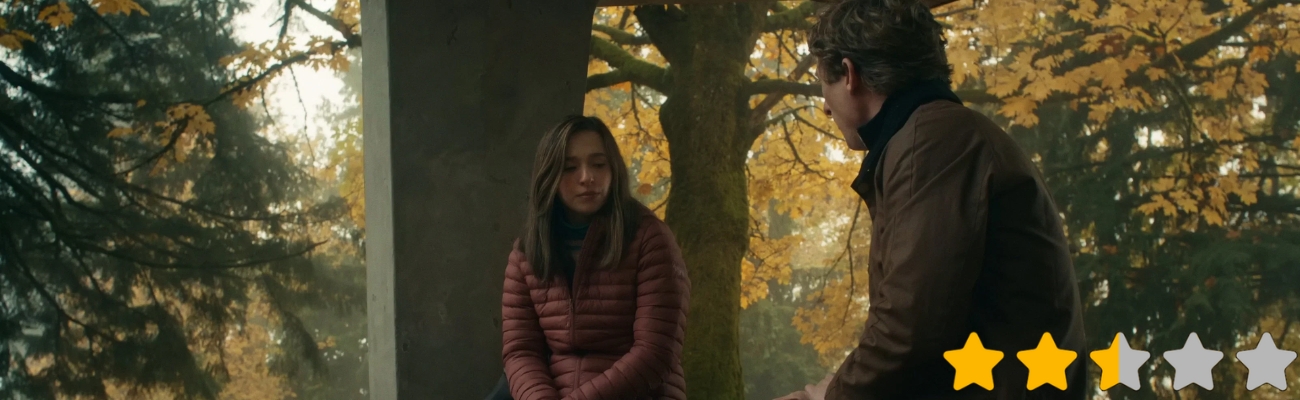
The Social Reckoning (dir. Aaron Sorkin)

Certificate: 15
Running Time: 112 mins
UK Distributor: Sony Pictures
UK Release Date: 9 October 2026
WHO’S IN THE SOCIAL RECKONING?
Mikey Madison, Jeremy Allen White, Jeremy Strong, Bill Burr, Wunmi Mosaku, Billy Magnussen, Betty Gilpin, Gbenga Akinnagbe, Anna Lambe, Aidan Laprete, Kelley Pereira, Nelson Franklin, Portia Doubleday, Patrick Fischler, Joey Brooks, Sierra Capri, Tehmina Sunny
WHO’S BEHIND THE CAMERA?
Aaron Sorkin (director, writer, producer), Stuart M. Besser, Todd Black and Peter Rice (producers), Alexandre Desplat (composer), Jeff Cronenweth (cinematographer), Alan Baumgarten (editor)
WHAT’S IT ABOUT?
A whistleblower (Madison) works with a tech journalist (White) to expose harmful Facebook data…
WHAT ARE MY THOUGHTS ON THE SOCIAL RECKONING?
The union of director David Fincher and screenwriter Aaron Sorkin for the 2010 Facebook drama The Social Network was a once-in-a-full-moon creative meld that neither creative has seen the heights of since. While Fincher has largely retreated from the big screen in favour of numerous Netflix releases (a contract he is about to be released from, thank goodness), Sorkin has attempted to break out on his own as a director, with results that have quite frankly been middling at best.
Now, Sorkin comes full circle with The Social Reckoning, a not-quite-a-sequel-but-still-kind-of-a-sequel to his Oscar-winning screenplay that tackles a more recent chapter in Facebook’s rocky saga, namely the scandal which revealed how Mark Zuckerberg and his revolutionary social media company effectively fanned the flames of our current-day political discontent. However, even though he is now fully in charge, Sorkin isn’t able to recapture the lightning in a bottle, with a film that feels strangely withheld from pursuing the timeliness he seeks to achieve here.
It should be noted that while Zuckerberg is in the film, and now played by Jeremy Strong, he isn’t the main focus this time around. He isn’t even a main character, despite what the marketing may suggest, as his brief appearances amount to little more than an extended cameo. Instead, we have Facebook employee Frances Haugen (Mikey Madison), who becomes disturbed by her company’s lack of oversight when it comes to online users becoming misinformed and even radicalised by extremist content on the platform. In response, she turns to Jeff Horwitz (Jeremy Allen White), the new tech reporter for the Wall Street Journal who’s so useless with technology that he can’t even figure out how to use the satnav in his car (why he was assigned from a more familiar political correspondence job to this wholly different field is as vague as anything else when it comes to character backstories). Together, they work to create a story from the classified documents that Frances has obtained to reveal how Facebook has become complicit in spreading and even promoting harmful online material, and how Zuckerberg himself played a knowing role in all of it.
There’s an interesting story here that Sorkin doesn’t appear to have the energy to get all that deep into. The filmmaker takes an oddly muted approach to his direction, filling scenes with bland static shots and having his actors simply stand or sit around delivering his trademark rat-a-tat dialogue without anywhere near the speed or conviction of Fincher. Sorkin is clearly going for an investigative journalism angle with this film, not dissimilar to All the President’s Men or Spotlight, but unlike those films the director struggles to make the very thing these characters are investigating feel as monumental as they are, with entire sections such as the rampant cyberbullying on the Facebook-owned Instagram and the conspiracy theorist groups being recommended during the spread of COVID-19 barely even getting any real attention. It leaves the narrative feeling rather dull despite its fascinating subject matter, because while few can deny that Sorkin is certainly a skilled writer, his wit still shining through in his dialogue, he isn’t a strong enough filmmaker to have all these elements firmly stick together, nor to give them the dramatic depth required to make us actually care about these characters or their situation.
The whole thing just comes off as a serious downgrade compared to Fincher’s film, though perhaps the problem lies in that unavoidable comparison. In The Social Network, there was a genuine rhythm and flow to how not just the dialogue but the editing, the cinematography (provided by Jeff Cronenworth, who also provides the visuals for The Social Reckoning) and even the performances worked in sync to deliver a compelling cinematic experience, whereas this film is to its own detriment much looser and therefore less sophisticated in its style, structure and execution. But it raises an intriguing question: would Sorkin’s film have worked better if Fincher’s film hadn’t existed? Even then, I doubt that it would have, because although the dialogue is once again peak Sorkin (take that how you will, whether you like or dislike his work), the filmmaking is just too flat and uninteresting to leave a hearty impression, and while the performances by the actors are perfectly fine, there isn’t anyone who sticks out enough to walk away with the entire film, not even Strong whose eerily robotic take on Zuckerberg comes off as slightly caricaturist rather than the three-dimensional character that Jesse Eisenberg offered.
Most of the time, you’re left not feeling very much at all, since the film is so immersed in its own dense exposition that it sacrifices dramatic intrigue for a rote run-through of the established facts. At least that coldness was very much by design under Fincher, but Sorkin doesn’t have that level of filmmaking prowess to go for the same kind of tone, made more apparent from some of the forced crowd-pleasing moments which come across as corny than genuinely emotional.
Either way, it’s clear that The Social Reckoning is a major disappointment compared to its predecessor, but even as its own separate entity it’s an unfortunately bland attempt to say something meaningful about its subject matter, instead making us yearn for Fincher’s far superior Facebook drama all the more.
SO, TO SUM UP…
The Social Reckoning pales significantly in the shadow of The Social Network, as writer-director Aaron Sorkin struggles to replicate that film’s speed and sophistication for something that comes off as strangely bland and unengaging, despite its fascinating subject matter.



Other recent reviews:





0 Comments